The NDIS and Music Therapy
Late last year, the NDIA caused a bit of a debacle when it announced plans to change the pricing structure for art and music therapy. If the changes had gone ahead, the price limit for these supports would have decreased from $193.99 to $67.56 per hour.
This news led to a significant backlash from art and music therapists, people with disability who use these supports and their families. In response, the NDIA commissioned an independent review into the pricing of art and music therapy.
There will be no change to the price limits of art and music therapy until after the outcome of the review.
Music therapy is still being recognised by the NDIS for inclusion in plans under the support cluster of Therapeutic Supports.
In this resource we will cover:
- What are therapeutic supports?
- What is music therapy and who can deliver it?
- How can music therapy help you achieve your NDIS goals?
- How can I request funding for music therapy in my NDIS plan?
- How can I have it funded in my NDIS plan?
What Are Therapeutic Supports?
Therapeutic supports are defined as supports that assist the participant to gain skills and improve independence related to identified needs in areas such as:
- language and communication
- personal care
- mobility and movement
- interpersonal interactions
- community living, to support positive changes in the person’s functioning, development and well-being
What Is Music Therapy?
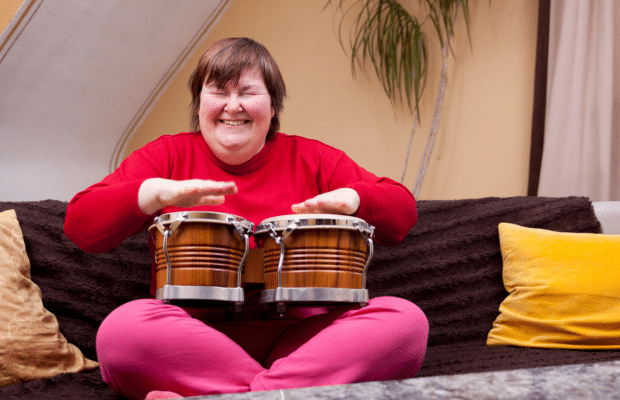
Music therapy is an established, evidence-based, research-supported profession that uses musical intervention to improve the physical, cognitive, social and/or emotional well-being of individuals.
Music therapists are musicians trained at university. They study how music can affect behaviours and how people feel and think. Music affects our bodies, our minds and our feelings. It breaks down barriers of disability and builds bridges of communication, helping us to relate to each other better.
It has the power to change moods, refocus attention, elicit emotions, express feelings, improve speech, improve gross and fine motor skills, promote social interaction and improve quality of life.
Who Can Deliver Music Therapy Support?
Music therapy can be delivered by registered Music Therapists (who must have a post-graduate degree) and they must be a member of the AMTA (Australian Music Therapy Association). This is one thing the NDIS Commission has stated as a requirement.
Be wary of individuals claiming to be music therapists. You can search the AMTA Directory by name to confirm they are registered.
You cannot use your NDIS funds for music therapy with someone who is not a registered therapist.
How Can Music Therapy Help You Achieve Your NDIS Goals?
Consider these questions when deciding whether music therapy is appropriate:
- Is music an important part of your life?
- Would you like to share your music time with other people?
- Would you like to explore ways to express yourself more?
- Could playing music with other people help you feel better?
These are areas and goals that music therapy can assist you with. It can help you expand your horizons, increase your independence and meet new people.
How Can I Request Funding for Music Therapy in My NDIS Plan?
If you want to include music therapy in your plan, the therapy needs to link to specific goals outlined in the person’s plan, and needs to be reasonable and necessary.
Common goals that music therapy can help to achieve include:
- To give me opportunities to meet people and make friends
- To increase my social skills
- To help me express my feelings, control my emotions and feel happy
- To encourage me to speak using song
- To maintain or improve mobility, communication and/or cognitive processing
- To improve my social interaction with others and learn appropriate behaviour in groups
- To build my self-esteem and confidence
How Can I Have It Funded in My NDIS Plan?
Until the NDIS price review on music therapy is completed, you can use your current NDIS funding for allied health therapy (music therapy) under:
- Improved Daily Living Skills – 15_615_0128_1_3 (Assessment Recommendation Therapy or Training – Music Therapist)
How Much Can My Music Therapist Charge Me?
To see the latest NDIS price for a Music Therapist, go to our NDIS Price Search tool and type in “Music Therapist”.
If you are receiving supports in your home and the therapist needs to travel to you, they may also charge for travel time and distance. Make sure you discuss this with your therapist before you start your sessions.
Sources