
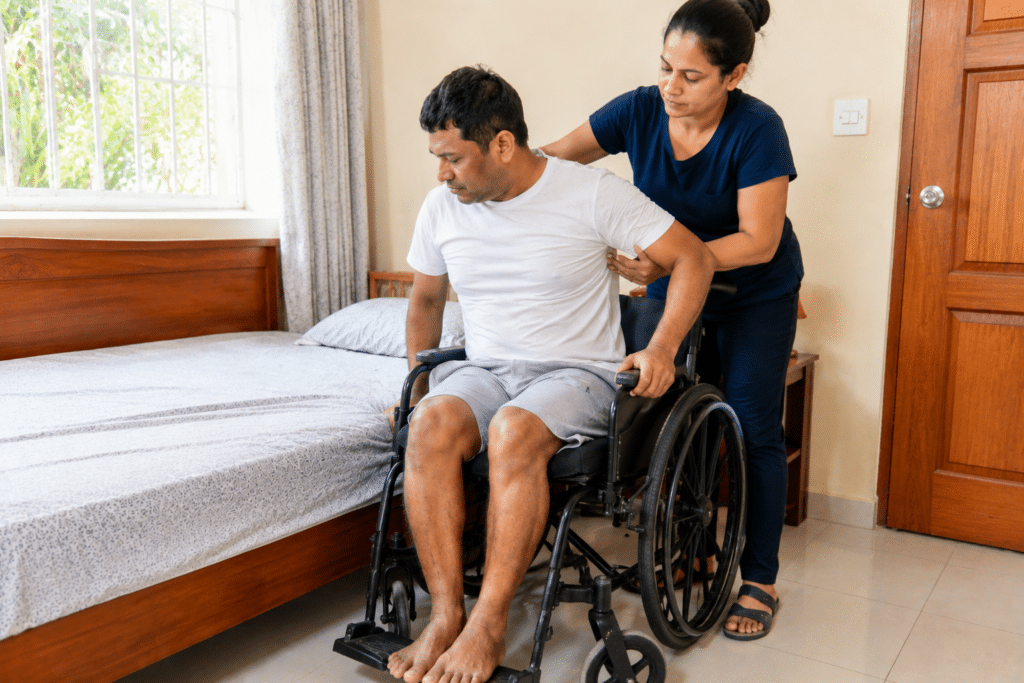
NDIS Support for Spinal Cord Injury
Living with a spinal cord injury can change your daily life in many ways. Mobility, personal care, transport, home access, therapy, equipment, and support coordination can all become part of everyday planning.
At Plan Hero, we support many NDIS participants living with spinal cord injury. Because we process hundreds of NDIS invoices and support claims, we understand how important it is to clearly understand your funding, manage supports effectively, and stay organised.
In this guide, we explain:
- NDIS eligibility for spinal cord injury
- How to apply for NDIS with spinal cord injury
- How to access NDIS supports after approval
What is a Spinal Cord Injury?
A spinal cord injury, often called SCI, happens when there is damage to the spinal cord that affects movement, sensation, strength, or body function. The impact can vary depending on the level and severity of the injury.
Some people may have paraplegia, where the lower part of the body is affected. Others may have quadriplegia or tetraplegia, where both arms and legs may be affected.
A spinal cord injury can impact:
- Mobility and transfers
- Personal care
- Bowel and bladder management
- Pain and fatigue
- Skin care and pressure injury prevention
- Home access
- Transport
- Community participation
- Work, study, and independence
Because SCI often creates long-term functional support needs, many people with spinal cord injury may be eligible for the NDIS if they meet the access requirements.
NDIS Eligibility for Spinal Cord Injury
To access the NDIS with a spinal cord injury, you need to meet the general NDIS access requirements. The NDIS looks at your age, residency, where you live, and whether your disability is caused by a permanent impairment. The impairment may be physical, neurological, sensory, cognitive, intellectual, or psychosocial.
Basic NDIS Eligibility Criteria
You may be eligible for the NDIS if you:
- Are aged between 9 and 65 when you apply
- Live in Australia
- Are an Australian citizen, permanent resident, or hold a Protected Special Category Visa
- Have a disability caused by a permanent impairment
- Usually need disability-specific supports to complete daily life activities
How This Applies to Spinal Cord Injury
For spinal cord injury, the NDIS does not only look at the diagnosis. It looks at how the injury affects your daily life.
You may need to show that your spinal cord injury:
- Is permanent or likely to be permanent
- Causes significant functional impairment
- Affects your ability to complete everyday activities
- Creates a need for ongoing disability-related support
- Requires assistive technology, equipment, home modifications, personal care, therapy, or support workers
The NDIS says eligibility is based on impairments and functional impact, not simply the type of diagnosis.
Functional Areas the NDIS May Consider
For a person with spinal cord injury, evidence may need to explain difficulties with:
- Moving around the home and community
- Getting in and out of bed or a wheelchair
- Showering, dressing, grooming, and toileting
- Preparing meals and completing household tasks
- Using transport safely
- Managing health-related disability supports
- Joining work, study, social, or community activities
Strong evidence is important. The NDIS asks for evidence that explains the type and extent of the impairment, whether it is permanent, and how it affects function.
How to Apply for NDIS with Spinal Cord Injury
Applying for the NDIS with spinal cord injury is usually done through an access request.
You can apply by contacting the NDIS, speaking with a local NDIS partner, or completing an Access Request Form. The NDIS also allows people and carers to make an access request by calling 1800 800 110 or by submitting the Access Request Form with supporting evidence.
Step 1: Gather Medical and Functional Evidence
For spinal cord injury, helpful evidence may include:
- Spinal specialist or rehabilitation physician reports
- Neurologist or neurosurgeon reports
- Hospital discharge summaries
- Occupational therapy functional assessments
- Physiotherapy reports
- Continence nurse reports
- Pressure care or wound care reports
- GP summary
- Assistive technology recommendations
- Home modification assessments
The evidence should clearly explain what support you need, not just state that you have a spinal cord injury.
Step 2: Explain Daily Impact
A strong application should describe what daily life looks like.
For example:
- Do you need help transferring from bed to wheelchair?
- Do you need support with showering or dressing?
- Can you safely prepare meals?
- Do you need equipment to prevent pressure injuries?
- Can you access your bathroom, bedroom, or front entrance safely?
- Do you need support to attend appointments or community activities?
This helps the NDIS understand the functional impact of your SCI.
Step 3: Submit the Access Request
You can submit your application with your supporting documents. Missing or unclear evidence can delay the decision, so it is worth checking that your reports cover permanency, functional impact, and support needs.
Step 4: Wait for the Access Decision
The NDIA will review your request and decide whether you meet the access requirements. If you are not eligible, the NDIS letter should explain why, and you can ask for a review if you disagree.
Not fully.
Right now, the section explains:
- what happens after approval
- what to prepare for the planning meeting
- examples of supports
But it does not clearly explain the actual process of accessing supports after getting an NDIS plan.
You need a clearer flow like:
- plan approval
- planning meeting
- receiving your NDIS plan
- choosing providers
- starting supports
- managing funding
How to Access NDIS Supports for Spinal Cord Injury
Once your NDIS application is approved, the next step is learning how to access and use your spinal cord injury supports through your NDIS plan.
Attend Your NDIS Planning Meeting
After being approved for the NDIS, you will usually have a planning meeting with an NDIS planner or Local Area Coordinator (LAC).
This meeting is important because it helps determine what supports and funding may be included in your plan.
During the meeting, you will discuss:
- Your daily routine
- Personal care support needs
- Mobility and transfer challenges
- Equipment you currently use or may need
- Therapy and rehabilitation goals
- Home accessibility issues
- Transport and community access needs
- Risks such as falls, pressure injuries, fatigue, pain, or isolation
For spinal cord injury, it is important to be specific. Instead of simply saying “I need support at home,” explain:
- What support you need
- How often you need it
- Why the support is necessary
- What happens without the support
This helps the NDIS better understand your functional support needs.
Receive Your NDIS Plan
Once your planning meeting is complete, the NDIS will create your plan and allocate funding into different support categories.
Your plan may include funding for:
- Daily personal care
- Support workers
- Physiotherapy and occupational therapy
- Assistive technology
- Wheelchairs and mobility equipment
- Home modifications
- Transport supports
- Community participation
- Support coordination
The supports included in your plan will depend on your individual goals and how your spinal cord injury affects your daily life.
Choose Your Providers and Start Supports
After your NDIS plan is approved, you can begin choosing providers to deliver your supports.
This may include:
- Support workers
- Therapists
- Assistive technology suppliers
- Home modification providers
- Support coordinators
- Plan managers
You can choose registered or non-registered providers depending on how your NDIS plan is managed.
Decide How to Manage Your NDIS Plan
You can manage your NDIS funding in different ways:
1 .Self-Managed
You manage your own invoices, bookings, and payments.
2. Plan-Managed
A plan manager helps process invoices and manage NDIS payments on your behalf.
3. NDIA-Managed
The NDIA pays registered providers directly.
Many people with spinal cord injury choose plan management because it can make managing multiple providers, invoices, therapies, and support services much easier.
At Plan Hero, we understand how overwhelming NDIS administration can become, especially when there are many supports and ongoing services involved.
Review and Adjust Your Supports Over Time
Support needs can change over time after a spinal cord injury.
If your circumstances change, you may be able to request changes to your NDIS plan to ensure your supports continue meeting your needs.
This may include:
- Increased support worker hours
- New equipment
- Updated therapy supports
- Home modifications
- Changes in mobility or health needs
Keeping updated reports and assessments can help support future plan reviews.